


Cadillac EV Charging in Connecticut: Home, Public, and Road-Trip Basics
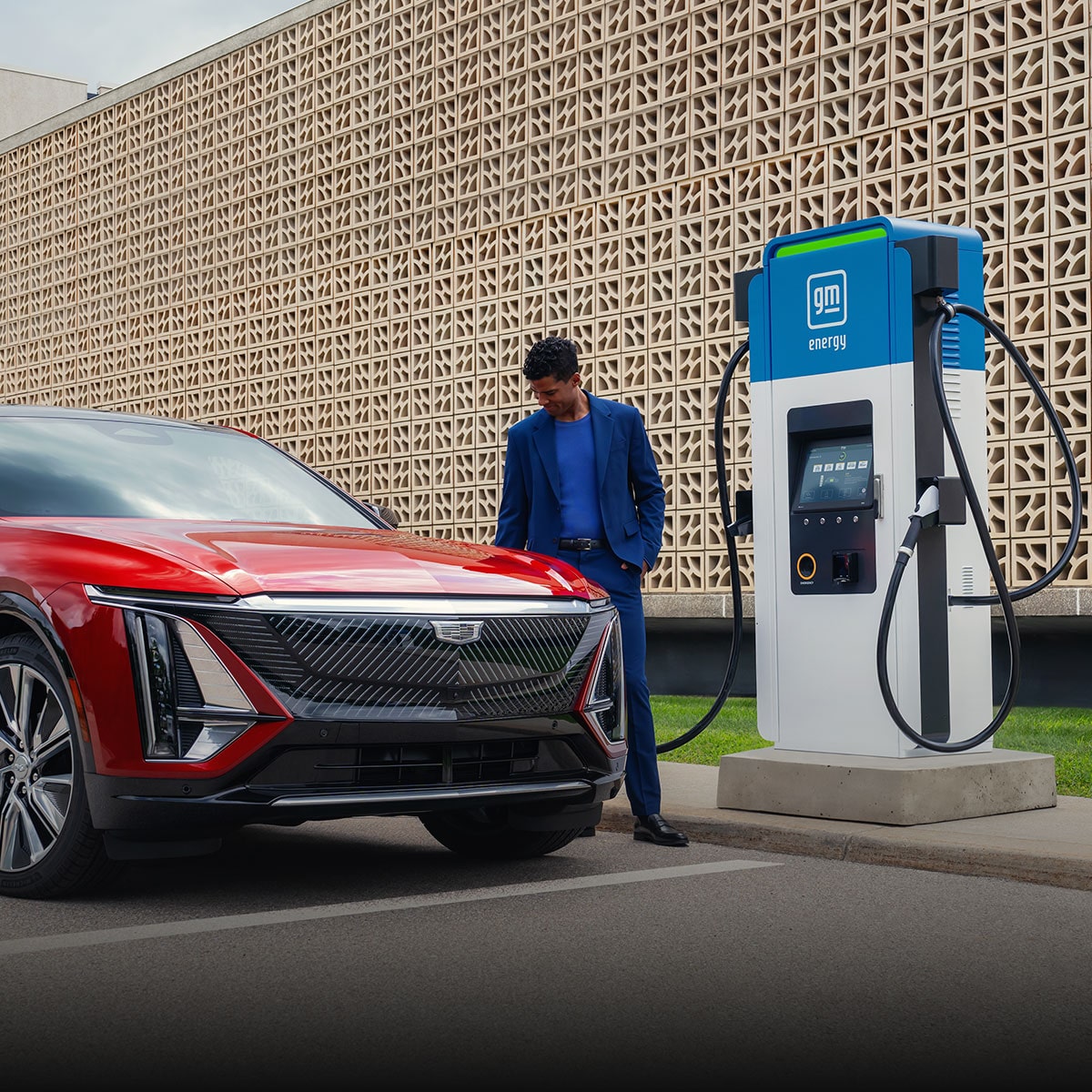
A practical Connecticut charging plan uses Level 2 charging at home for most daily driving and public DC fast charging for longer trips. A standard 120-volt outlet can provide slower Level 1 charging for light daily mileage or backup use. Before choosing equipment, confirm the Cadillac’s charge port, the home’s electrical capacity, where the vehicle parks, and the public networks on routes you regularly drive.
Drivers do not need to use every charging option the same way. The goal is to match charging speed to parking time: charge while the vehicle is already at home overnight, add energy at a destination when convenient, and use DC fast charging when travel time matters.
Level 1 vs. Level 2 vs. DC Fast Charging
| Charging type | Typical power source | Best use | Planning note |
|---|---|---|---|
| Level 1 | 120-volt household outlet | Short daily trips, topping off, or backup charging | Slowest option; outlet condition and safe circuit use matter. |
| Level 2 | 240-volt outlet or hardwired charging equipment | Primary home charging and longer destination stops | Faster than Level 1; professional installation may be required. |
| DC fast charging | Public commercial charging station | Road trips and faster charging when time matters | Speed varies with the vehicle, charger, battery state, and temperature. |
Actual charging time and energy added vary with charging equipment, battery condition and temperature, vehicle settings, and other factors. Consult the manuals for the vehicle and charging equipment.
How to Plan Home Charging in Connecticut
For many households, Level 2 is the most convenient everyday setup because the vehicle can recover a typical commute while parked overnight. The work begins with the parking location and electrical system—not with selecting the highest advertised charger output.
- Confirm where the Cadillac will park. Measure cable reach and protect the charging cord from traffic, water, snow-removal equipment, and trip hazards.
- Identify the vehicle’s connector and onboard charging capability. The charging equipment should be compatible with the exact model and model year.
- Have a qualified electrician evaluate the property. The panel, available capacity, circuit, wiring route, and charger location determine the appropriate installation.
- Check permits and utility requirements. Local rules and utility programs can change, so verify current requirements and any available incentives before work begins.
- Set a charging schedule. The vehicle or myCadillac app can help schedule home charging around departure time or preferred charging periods, depending on model and equipment.
If you rent, live in a condominium, or park in a shared area, obtain property-owner or association approval before planning electrical work. Ask who owns the equipment, how electricity is measured, and who is responsible for maintenance.
What Charge Target Should You Use Every Day?
Cadillac recommends setting the battery target to 80% for daily use to support battery health and optimal performance. That is a general daily target, not a rule that prevents charging higher. Before a longer drive, a higher target may provide useful additional range.
Check the owner’s manual and in-vehicle settings for the exact Cadillac. Driving conditions, temperature, route, payload, climate-control use, and speed all influence real-world range, so plan from the vehicle’s current estimate rather than relying on a single published number.
Connector Compatibility: NACS and CCS
Cadillac states that a native North American Charging System (NACS) port is standard on the 2026 OPTIQ and all 2027 model-year Cadillac EVs. That includes the 2027 Cadillac LYRIQ, 2027 Cadillac OPTIQ, and 2027 Cadillac VISTIQ.
A Cadillac EV without a native NACS port may be able to use compatible NACS public charging through a GM-approved adapter. Connector shape is only part of compatibility: the station, vehicle, account setup, adapter, and charging network must all support the session. Confirm the requirements for your exact model year before traveling.
How to Use Public Charging With Less Guesswork
The myCadillac mobile app can help drivers locate stations, view details, and plan a route. Compatible Cadillac EVs with Google built-in can also use Google Maps for EV route planning. Before depending on a station, check:
- Connector and vehicle compatibility
- Charging speed supported by both the station and vehicle
- Current availability and operating status
- Access hours, parking restrictions, and pricing
- Payment or network enrollment requirements
- A backup station within a comfortable remaining-range buffer
Cadillac’s Energy Assist features can support access to participating networks and payment through the myCadillac app, with Plug & Charge available where the vehicle and network are compatible. Features, networks, and account requirements can change, so review current app information before departure.
A Simple Connecticut Road-Trip Charging Plan
Whether your route stays along I-84 and I-91 or continues beyond Connecticut, the same planning method applies:
- Enter the full destination before leaving. Let the vehicle or app account for the current state of charge and route.
- Review every proposed charging stop. Confirm that the station supports your connector and the charging speed you expect.
- Keep a backup option. Do not plan to arrive with so little range that one unavailable charger creates a problem.
- Use charging time productively. Stops near food, restrooms, or shopping make the pause easier to fit into the trip.
- Recheck the route after major changes. Cold weather, detours, sustained highway speed, added cargo, and climate use can change the estimate.
Cold-Weather Charging and Range
Connecticut winter temperatures can reduce range and slow charging because the battery and cabin both require energy. When possible, keep the vehicle plugged in and use scheduled departure or preconditioning features available on the model. This can prepare the cabin and battery while the vehicle is connected to external power.
Leave a larger range buffer in cold weather, especially for highway travel. Snow, wind, wet roads, winter tires, and heating demand can all affect consumption. The current in-vehicle estimate is more useful than assuming summer range will remain unchanged.
How to Read Cadillac Charging Status Lights
Cadillac uses the charging-status indicator near the windshield to communicate basic charging state. The exact behavior can vary by vehicle, so confirm it in the owner’s manual. Cadillac’s general guidance includes:
- Blue flash: the charging cord has been connected.
- Green blinking: the vehicle is charging.
- Solid green: charging is complete.
- Blue blinking: charging is delayed according to the selected schedule.
If charging does not start, check that the plug is fully seated, review the vehicle’s charging schedule, inspect the station or circuit status, and follow the troubleshooting guidance for the vehicle and charger.
Frequently Asked Questions
What is the best way to charge a Cadillac EV at home?
For many drivers, a professionally installed 240-volt Level 2 charging setup is the most practical primary home solution because it charges faster than a standard 120-volt outlet. The right equipment and circuit depend on the vehicle, home electrical system, parking arrangement, and local requirements.
Can I charge a Cadillac EV from a regular wall outlet?
A compatible Cadillac EV charging cord can use a standard 120-volt outlet for Level 1 charging. It is the slowest charging method and is generally best for topping off after short trips or as a backup. Follow the vehicle, charging-equipment, and electrical-safety instructions.
Should I charge my Cadillac EV to 100% every day?
Cadillac recommends an 80% target for daily use to support battery health and optimal performance. A higher target can be useful before a longer trip when additional range is needed. Follow the guidance for your specific vehicle in the owner’s manual.
Do 2027 Cadillac EVs use NACS charging ports?
Yes. Cadillac states that a native North American Charging System port is standard on all 2027 model-year Cadillac EVs. Earlier non-NACS-native vehicles may need a GM-approved adapter to use compatible NACS public chargers.
How can I find public Cadillac EV charging stations?
The myCadillac mobile app can locate public charging stations, show station details, and help plan a route. Compatible vehicles with Google built-in can also use Google Maps for EV route planning. Confirm connector compatibility, availability, access, and payment details before relying on a station.
Is DC fast charging the same as Level 2 charging?
No. DC fast charging is the fastest public charging option supported by the vehicle and is useful when time matters on a trip. Level 2 uses AC power and is common at homes, workplaces, hotels, garages, and public destinations where the vehicle can remain parked longer.
Explore a Cadillac EV at Blasius Cadillac
Charging becomes easier to understand when you can see the charge port, route-planning tools, and in-vehicle settings in person. Visit Blasius Cadillac at 90 Scott Rd, Waterbury, CT 06705, or call (203) 701-6692 to ask about an electric Cadillac.
Charging performance, range, equipment, app features, and network access vary by vehicle and conditions. Always follow the owner’s manual, charging-equipment instructions, local electrical requirements, and station guidance.
0 comment(s) so far on Cadillac EV Charging in Connecticut: Home, Public, and Road-Trip Basics